
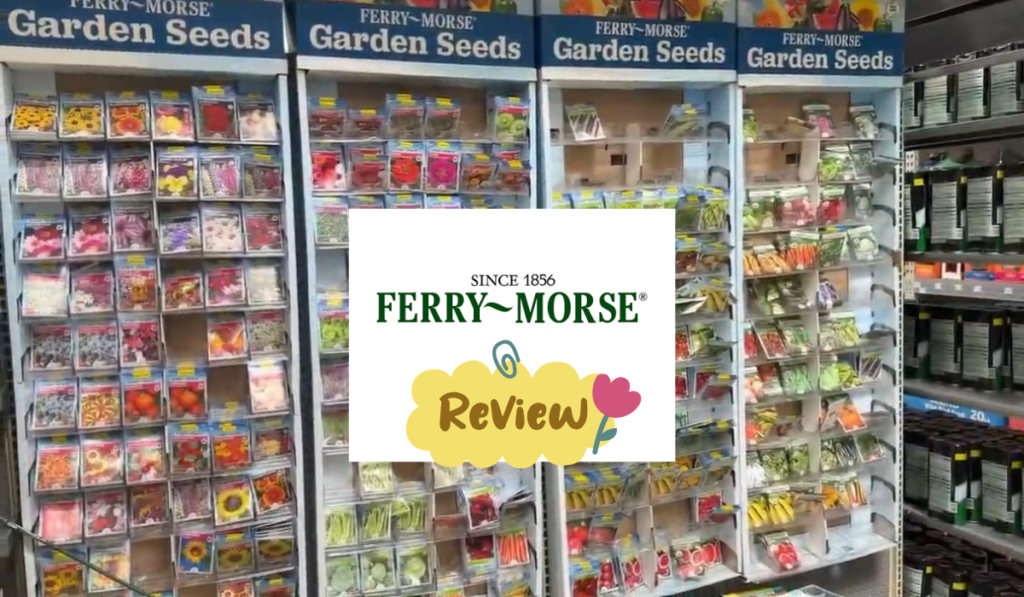

I went into the hardware store last spring for potting mix and plant labels. I came out with those things, plus Ferry-Morse packets of tomatoes, cucumbers, beans, lettuce, basil, parsley, zinnias, marigolds, and sunflowers. This is how my garden expands most years. I make a reasonable plan, then stand in front of a seed rack and decide one more row will somehow fit.
By the end of the season, I’d grown enough of those packets to have a real opinion about Ferry-Morse. Some crops were nearly effortless, a few came up unevenly, and one needed a second attempt before it worked out.
Let me tell you how each crop performed, where the packets themselves fell short, and how Ferry-Morse stacks up against Burpee, Baker Creek, and Botanical Interests, so you can decide whether it’s the right seed rack for your own garden.
My Overall Thoughts (At a Glance)
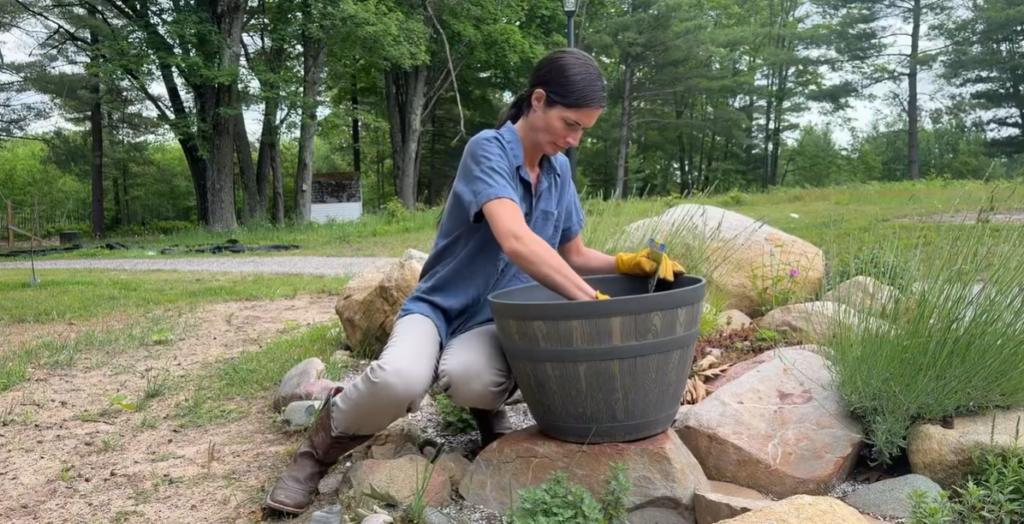
Overall, it was a good, normal gardening season. The beans, lettuce, basil, zinnias, marigolds, and sunflowers were nearly effortless, the cucumbers recovered from a rocky start, and parsley just took its time. Tomatoes were the one real struggle, but a second start under better conditions fixed that fast. The packets cover the basics (depth, spacing, germination, timing) but skip crop-specific warnings, though Ferry-Morse’s online growing guides help fill the gap.
I’d buy Ferry-Morse again. The seeds are easy to find, familiar varieties performed well, and I skipped specialty-seed prices and shipping. That said, it’s not automatic for every crop: Botanical Interests gives more info on the packet, Baker Creek is better for unusual heirlooms, and Burpee is close enough that I compare varieties rather than brands.
Bottom line: great for a first garden of familiar vegetables, herbs, and flowers. For rare or unfamiliar crops, I’d split the order with another company.
What I Planted and How the Season Started
This was not a controlled germination test. It was a regular home garden dealing with a wet spring, cold nights, summer heat, insects, irregular rain, and a gardener who occasionally waters because the soil looks dry on top without checking whether the tray is still soaked underneath.
I planted Big Boy and Roma tomatoes, Straight Eight cucumbers, Provider bush beans, Buttercrunch lettuce, Genovese basil, flat-leaf parsley, California Giant zinnias, French marigolds, and Mammoth sunflowers. The tomatoes, basil, and parsley started indoors in March. Lettuce went directly into the garden in April under light cover. I waited until May, when the soil had actually warmed, to plant beans, cucumbers, and most of the flowers outside.
That last part came from experience. In the past, I’ve planted beans after one warm afternoon and convinced myself spring had arrived. Most sat in cold soil and rotted. A soil thermometer cost less than replacing several packets and saved me from arguing with the weather.
I kept the packets and photographed the labels. By July, after the wind moved a marker and two tomato plants grew together, I was grateful for anything showing which one was supposed to be a Roma.
Germination Results Across the Garden
Buttercrunch lettuce was the first to appear. I direct-sowed it in April, and most of the row showed green within the first week. One end remained thin, but that section had caught runoff during a heavy rain and looked partly washed out. The rest came up evenly enough that I stopped looking for a reason to blame the packet.
Lettuce and Beans
The Provider bush beans were similarly dependable once the soil was warm. I planted an extra seed in a few spots because I expected losses, then had to thin some of those doubles. There were still a handful of gaps. I replanted them, and most of the replacement seeds emerged. One space stayed empty, but neighboring plants soon leaned into it.
Cucumbers
The Straight Eight cucumbers were less consistent. Several seedlings came up quickly, while two hills remained bare. I replanted both. One produced a healthy vine on the second attempt, and the other never did. That empty hill bothered me in May because cucumber spacing makes every missing plant obvious. By midsummer, the surviving vines had sprawled past their assigned area, and I was leaving extra cucumbers on the porch.
Flowers (Zinnias, Marigolds, Sunflowers)
The flowers gave me the fewest problems. California Giant zinnias came up thickly enough to require thinning. The marigolds were slower but eventually filled their border.
Mammoth sunflower seedlings were large and obvious from the beginning, which matters in my garden because anything small and unfamiliar is in danger of being pulled while I weed. All three flower packets produced plants that looked like what I had bought, and the zinnias kept going long after several vegetable beds had started looking tired.
Because I grow flowers partly for pollinators, I checked the seed information before planting. Ferry-Morse says its seeds are Non-GMO, non-neonic, and bee-safe. The zinnias and sunflowers also stayed busy with bees through the summer, which was exactly what I wanted from that part of the garden.
What the Indoor Starts Taught Me
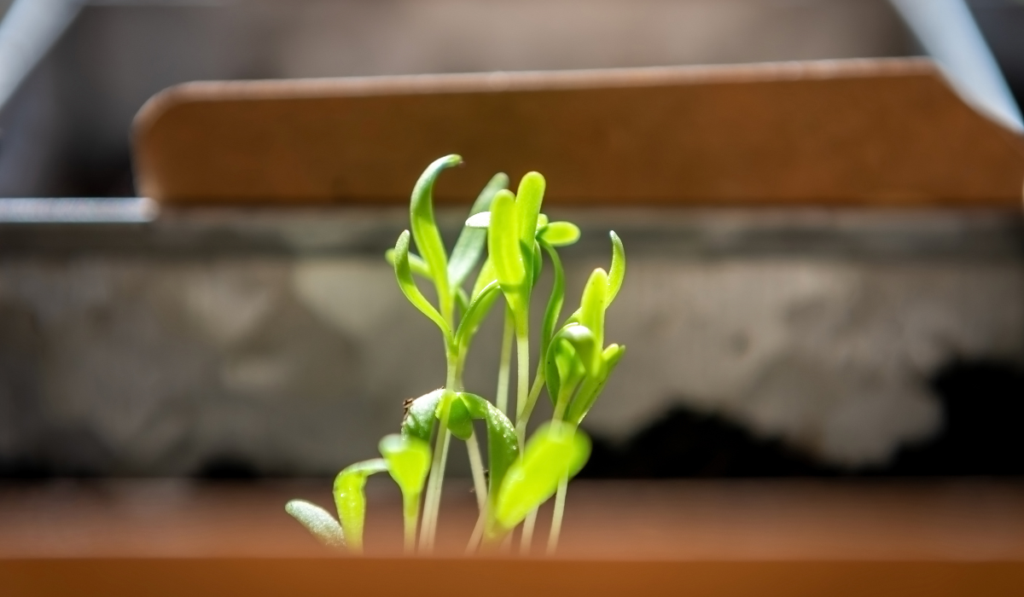
Parsley was the first seed that tested my patience. For more than a week, the tray looked exactly as it had the day I planted it. I checked every morning anyway, as though staring at dark soil might speed things up. I had nearly decided to reuse the cells when a few thin green hooks appeared. The rest followed gradually instead of coming up together.
Parsley’s Slow (But Normal) Germination
Slow parsley germination is normal, and the plants grew well once established. Still, a new gardener who just watched lettuce emerge in days may assume parsley is dead. The printed range does not explain how unimpressive the tray can look while you wait.
Basil and the Cold-Room Mistake
The Genovese basil was easier, although I made my own trouble. The room cooled more than I realized at night, so the first seedlings emerged unevenly. Once I moved the tray to a warmer spot, the remaining seeds followed. I then lost a few seedlings by keeping the mix too wet. The surface would turn light, I would water again, and the bottom of the tray stayed soggy. Two stems weakened at the soil line and collapsed.
That was me hovering over the tray, not a seed problem. The surviving basil grew quickly after transplanting, and by early summer I was cutting handfuls for the kitchen.
Tomatoes: My Roughest Start
The tomatoes gave me the hardest start of them all. I sowed Big Boy and Roma indoors in mid-March under shop lights. Some germinated, others were slow, and the earliest seedlings stretched because the lights were too far above them. The room also cooled at night. I had a tray with enough empty cells and pale stems that blaming the packet felt reasonable for about a day.
Instead of buying new seed, I started a smaller second round from the same packets. I moved the tray, lowered the lights, and used a heat mat during germination. That batch came up much more evenly. The seed had not changed. My conditions had.
I transplanted the strongest plants near the beginning of June after hardening them off. The Big Boys outgrew the supports I had chosen and needed extra stakes later. The Roma plants stayed easier to contain and set clusters of smaller, meatier fruit. The first ripe tomatoes arrived in August. I got slicing tomatoes from the Big Boys, enough Romas for sauce, and every plant matched the packet label.
Packet Quality Is The Main Weakness
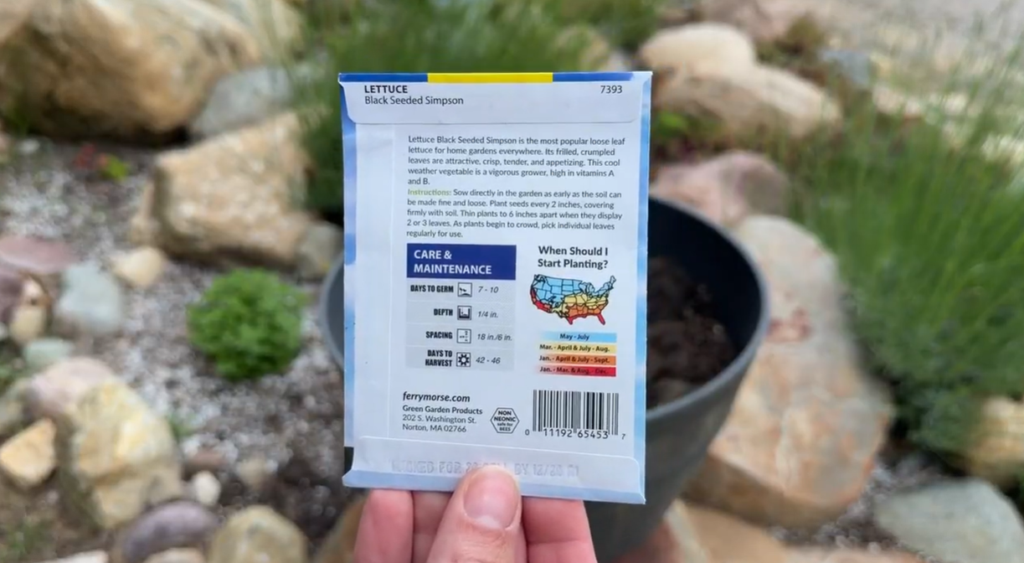
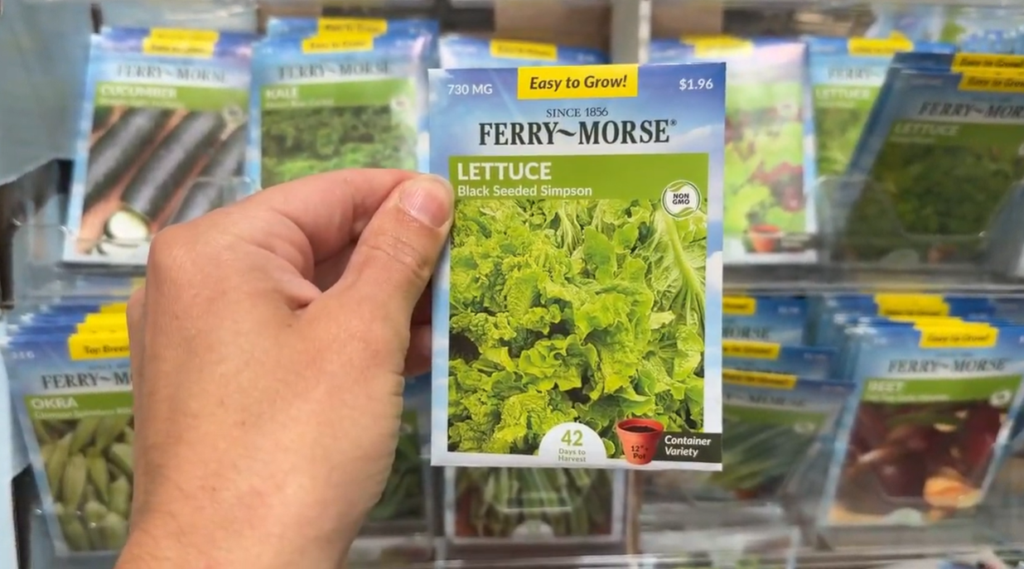
Ferry-Morse packets are functional. The front gives the variety name and a glossy photograph. The back provides depth, spacing, sowing guidance, germination estimates, and harvest timing. For beans, lettuce, zinnias, marigolds, and sunflowers, that was enough.
For parsley, basil, and tomatoes, I wanted another sentence or two. Tell a beginner that parsley can be painfully slow, that basil resents cold conditions, or that tomato seedlings stretch quickly when the lights are too far away. Those notes would have been more useful to me in March than another general description of the mature plant.
Botanical Interests does this better. Its packets often feel like compact growing guides, with enough context to help when the basic numbers do not tell the whole story. I do not need that much information for bush beans I have planted for years, but I appreciate it when trying something unfamiliar. Ferry-Morse has more detail online through its growing guides, FAQ, and other educational resources. The information is there. I would simply move some of it closer to the seed, either by printing a clear QR code for the exact variety or adding one practical warning to the packet.
That criticism matters because Ferry-Morse otherwise suits beginners. Its seeds are sold alongside trays, heat mats, lights, kits, and nutrients, and the Garden Matchmaker quiz can help narrow down what to plant. The support system is broader than the packet, but the packet is what people hold while standing over a questionable tray.
Selection, Price, and Practical Value
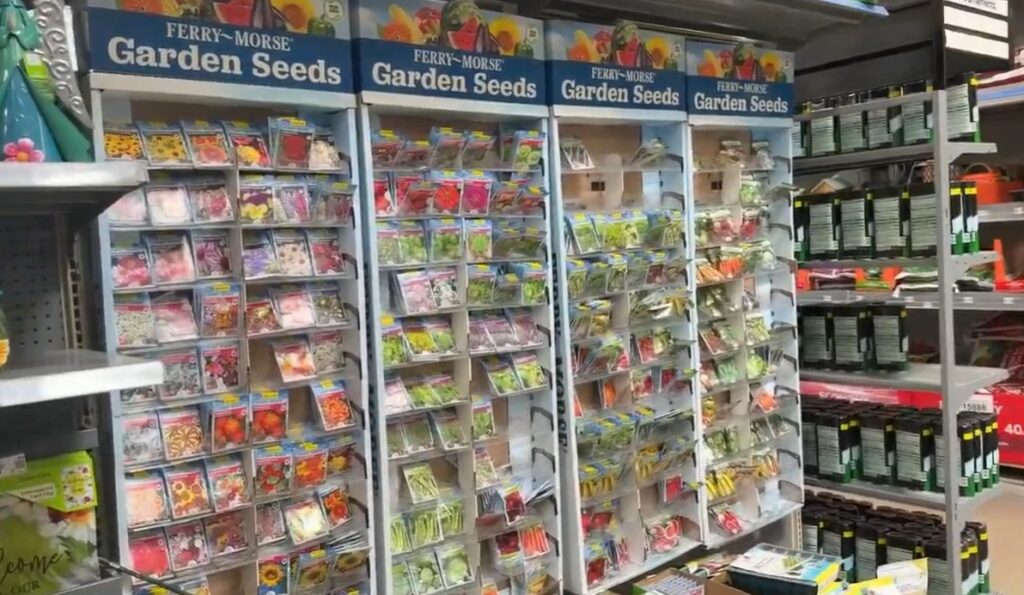
The Ferry-Morse rack covered most of what I wanted for an ordinary home garden in one stop: slicing tomatoes, sauce tomatoes, cucumbers, bush beans, lettuce, common herbs, and easy flowers. The company also sells organic, heirloom, and pollinator-friendly varieties, although those descriptions belong to the individual packets that carry them rather than the entire line.
This is not where I shop first for a rare regional bean or a tomato with a long family history. Most seasons I need vegetables we will eat, herbs I use, and flowers that tolerate some neglect. Ferry-Morse handles that part well.
I no longer have the receipt from that hardware-store trip, so I cannot give an exact total for every packet. The Ferry-Morse and Burpee packets I considered were close enough in price that the difference did not affect what I bought. That was not enough to change my decision. I chose based on the variety, the packet date, and whether I thought I would use most of the seed.
The comparison with specialty sellers was more noticeable. Botanical Interests packet prices are often in the same general range, but ordering only a few packets directly would have added shipping. Buying Ferry-Morse locally avoided that extra cost. The better instructions can justify the added cost for a crop I have never grown. For beans, basil, or zinnias I already understand, buying Ferry-Morse locally was the better value because I could take the packets home that day without paying to have them mailed.
The harvest mattered more than saving fifty cents on one packet. The beans gave me repeated pickings and bags for the freezer, the basil supplied the kitchen for months, and the zinnias produced more flowers than I had vases. I had some cucumber gaps and lost the first tomato start, but enough of the garden produced well that I felt I had gotten good value from the packets.
Ferry-Morse vs. Burpee, Baker Creek, and Botanical Interests
Burpee is the closest comparison because it is also familiar, widely stocked, and aimed at everyday gardeners. I have grown Burpee vegetables in other seasons and have not seen a consistent germination difference large enough to make me loyal to one brand. When both companies offer the same crop, I look at the actual variety and packet rather than assuming the name on the front tells me which seed will perform better.
Ferry-Morse has an advantage for someone putting together a first seed-starting setup. Its seeds, trays, lights, heat mats, kits, and growing resources can all be found within the same product system. I already own most of those supplies, so I am usually making a simpler decision about which tomato, bean, or flower I want to plant.
I use Baker Creek for a different reason. That is where I look when I want an unusual heirloom or a variety I am unlikely to find locally. Ferry-Morse is the more practical choice when the beds are ready and I need familiar seeds without placing an order. I have room for both kinds of seed buying, but they serve different parts of my garden.
Botanical Interests has the strongest packets of the three for a crop I have never grown. The extra explanation has helped me avoid mistakes that a basic planting chart would not have caught. I am willing to pay a little more for that when I need the guidance. For familiar vegetables and flowers, I am usually comfortable buying Ferry-Morse and looking up a question later if one comes up.
Addressing the Older Germination and Labeling Complaints
Old complaints about Ferry-Morse still appear when people search the brand. Some involve poor germination, while others involve varieties that were allegedly mislabeled. A number of the discussions that continue to circulate are several years old. Their age does not make the experience irrelevant to the gardener who lost part of a season.
A packet costs only a few dollars, but a failed tray costs weeks. A mislabeled pepper or tomato may not reveal itself until fruit appears, when little warm weather remains. Germination complaints are hard to judge from a short review because temperature, moisture, depth, storage, and timing all matter. My first tomato tray showed how quickly a setup problem can resemble a seed problem, although that does not explain every failed planting someone else has reported.
Labeling complaints are harder to evaluate from the outside because the gardener has to trust what is printed. Everything I planted last season grew into the variety described on the Ferry-Morse packet. I did not have repeated germination failures across several packets handled under the same conditions, either. My weaker results were limited to certain crops, and the tomatoes improved after I changed the setup.
Ferry-Morse emphasizes fresh seed and gives customers a route for reporting problems. I did not need to contact the company, so I cannot say how quickly or satisfactorily it handles a complaint. The freshness commitment is reassuring, but growing conditions still have too much influence for any seed company to promise that every seed will emerge.
Who I Would Recommend Ferry-Morse To
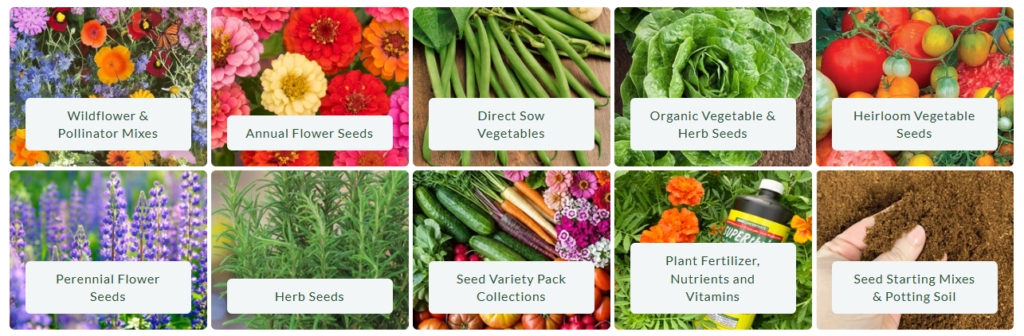
I would recommend Ferry-Morse to a first-time gardener who wants familiar vegetables, herbs, and flowers without ordering from several specialty companies. It also suits gardeners who prefer buying locally, want seed-starting supplies in the same place, or need online help after leaving the store. The selection is broad enough for a productive backyard garden without forcing every bed to become an experiment.
I would look elsewhere first if rare heirlooms are the main reason you garden. I would also consider Botanical Interests for a crop I had never grown and wanted detailed instructions for, or Baker Creek when variety hunting is part of the fun. Between Ferry-Morse and Burpee, I would continue choosing packet by packet.
Final Verdict: Would I Buy Ferry-Morse Again?
After a full season, Ferry-Morse did what I needed it to do. Some crops were nearly effortless, a few tested my patience, and one needed a second attempt before it came together. By the end of the season:
- The lettuce and beans filled their rows.
- The basil became something I had to keep cutting.
- The parsley eventually came up.
- The cucumbers recovered from a few empty hills and produced heavily.
- My second tomato start gave me enough Big Boys for slicing and enough Romas to make sauce.
- The marigolds bordered the beds, the sunflowers stood where I had planted them, and the zinnias kept producing after much of the vegetable garden had started looking tired.
By the end, I had beans in the freezer, tomatoes lined up on the counter, basil gone to flower because I never caught up with it, and more zinnias than I had vases to hold. I also came away with a short list for next year, mainly warmer trays for the tomatoes and a lighter hand watering the basil.
None of that came from a carefully planned order. It came from a bag of potting mix and plant labels that turned into a full seed rack browse at the hardware store, the way it usually does. That was enough to bring me back to the Ferry-Morse rack next season.