

- Best Pollinator Seed Mix to Transform Your Home Garden into a Wildlife Haven - October 15, 2026
- Ferry-Morse vs. Botanical Interests: Which Seed Brand is Better for Home Gardeners? - September 25, 2026
- Best Stump Killer To Consider for Your Yard - January 5, 2024
About five years ago, our next-door neighbors came and told me that they were going to get bees. I was thrilled with that prospect because it meant that I would very likely get a boost in my garden productivity without having to do any extra work.
That turned out to be exactly the case.
But their bees didn’t seem to linger very long in my yard, probably because it was mostly a vegetable garden that didn’t have a lot of flowers. I decided that I would start small, with a Ferry-Morse wildflower packet that had an annual and perennial mix native to my area. I planted them along my fence line, and suddenly the neighboring bees were hanging out even longer.
Whether you are trying to bring back native plants or add a spark of color, finding the best pollinator seed mix can help you transform your home garden into a wildlife haven offering shelter, food, and safety for local pollinators like migrating Monarch butterflies, native bumblebees, and honey bees. Even a super small area in your yard can help support these populations.
Still, it can be hard to figure out which wildflower blend is best when you see how many are out there. So, I’ve narrowed down my top six choices based on your target pollinator and the type of mix you get.
How to Choose the Right Pollinator Mix: Coverage and Balance
Before throwing seeds across your dirt and hoping for the best (trust me, I’ve done it, and it failed), you need to understand two critical factors that determine whether your wildflowers will succeed or fail: seeding coverage and the annual-perennial balance.
Seeding Coverage
Speaking from years of experience, one of the most common mistakes home gardeners make is miscalculating how many seeds they actually need. If you don’t have enough seeds, you’ll end up sowing seeds too thinly, and that means weeds will take over any available space and choke out your young flowers. On the other hand, if you sow seeds too thickly, they crowd each other out, and no one gets the water (or something else) like they need.
When buying a seed mix, always look at the weight of the package and the manufacturer’s stated coverage area.
- For Small Borders or Raised Beds: A standard one- or two-ounce packet is typically perfect, generally covering between 100 and 500 square feet.
- For Large Meadows or Back-Fence Borders: You will want to look at bulk bags (often sold in one- or five-pound increments). One pound of pure wildflower seed typically covers about 1,000 to 2,000 square feet.
Tip: Always clear away any existing grass or weeds before you sew, scuff up around the top one inch of soil, and scatter your seeds evenly before pressing them into the ground and covering them. If you don’t, I promise whatever was already living in that area will outcompete your flower mix.
The Annual-Perennial Balance
Wildflower seed mixes are generally formulated using a specific ratio of annual flowers and perennial flowers. Understanding this balance helps you manage your expectations across different seasons.
- Annual Flowers: Annuals grow, bloom, set seed, and die all within a single growing season. A mix that’s heavy in (or exclusively made up of) annuals like zinnias, cosmos, and bachelor’s buttons will look great for about 60 days after planting, but they won’t come back year after year.
- Perennial Flowers: Perennials spend their first year establishing a deep root system underground, so you won’t get flowers for the first two or three years, but once you do, they come back every year without you doing anything. Some of the perennial flowers I have include purple coneflowers, black-eyed Susans, and wild bergamots.
Tip: Look for a balanced blend, usually somewhere around 60% annuals and 40% perennials. During that first season, the slightly higher annual blend will explode and give immediate nectar to bees and butterflies. By the second and third seasons, those perennials will take over more permanently. Each subsequent year, you can add an annual-only wildflower mix to the same area to balance it out.
Best Pollinator Seed Mix: Comparison
To help you decide the best pollinator seed mix for your garden/landscaping goals, this chart gives a quick comparison.
| Pollinator Seed Mix | Targets | Approx. Cost for a Packet/Small Size | Approx. Cost for Bulk/Large Size | Annual vs. Perennial | Best For |
| Ferry-Morse Bee Feed | Honeybees and native bees | $12.67–$17.99 (7 oz./standard mix pack) | $39.99–$43.99 (1-lb. bulk bag) | Balanced mix (annual/perennial) | Low-cost bee habitats |
| Eden Brothers Bee Feed | Bees and foraging insects | $13.99 (“Bee Happy” Organic 1-oz. packet) | $16.49 (“The Bees Knees” 1/4-lb. bulk) | Balanced mix (annual/perennial in bulk sizes) | Large meadows and pastures |
| Ferry-Morse Monarch Butterfly | Monarchs and large butterflies | Varies by retailer | $39.99 (1-lb. bulk bag) | Includes perennial host milkweed | Monarch conservation |
| Botanical Interests Bring Home the Butterflies Mix | Butterflies | $3.49–$6.49 (3-g. seed packet) | $26.99 (eco-friendly seed shaker tube) | 60% annual/40% perennial | Beginners/small beds |
| Burpee Pollinator Mix | General pollinators and birds | $7.69–$14.95 (standard packet) | $32.48–$35 (25,000-count bulk pack) | Perennial-heavy blend | Tough or poor soils |
| Livingston Seed Pollinator Palooza | All-in-one wildlife | $2.49–$3.99 (estimated retail rack packet) | Not standard in bulk bags | Balanced mix (annual/perennial) | Independent retail lovers |
Different insects are drawn to different shapes, sizes, and colors of flowers. To maximize the impact of your garden, you’ll have to choose a seed mix based on the type of pollinators you want to support. Let’s look at my top choices for three distinct pollinator groups.
Best Pollinator Seed Mix for Honeybees and Native Bumblebees
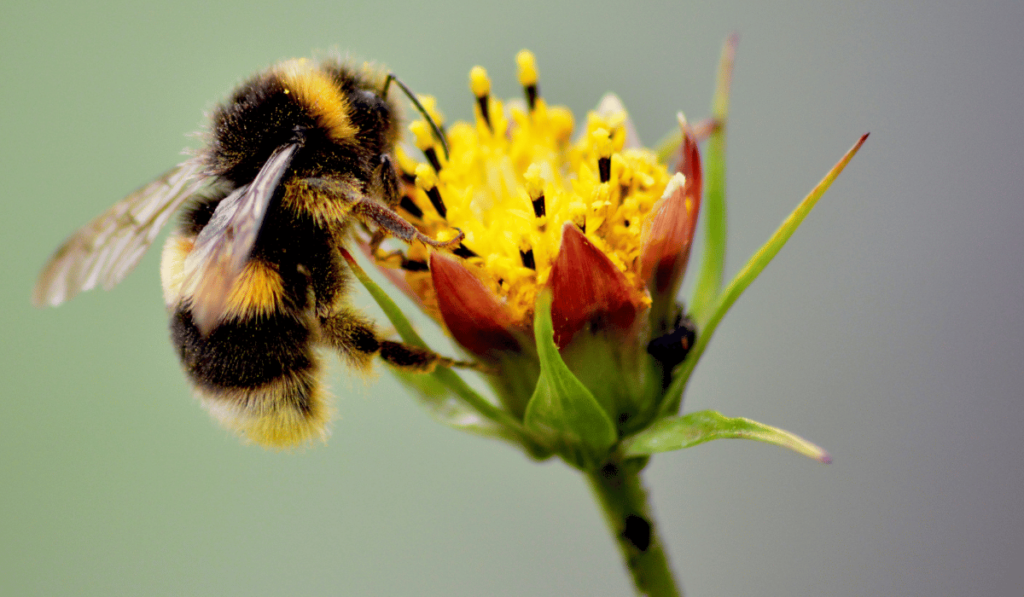
Bees are highly visual creatures, so they are naturally drawn to bright blue, purple, yellow, and white blossoms. It’s better to cultivate flower shapes that give bees a sturdy landing platform or a big cluster where they can gather large amounts of pollen easily.
My top two favorites for supporting honeybees and native bumblebees are Ferry-Morse and Eden Brothers.
Ferry-Morse Bee Feed Mix
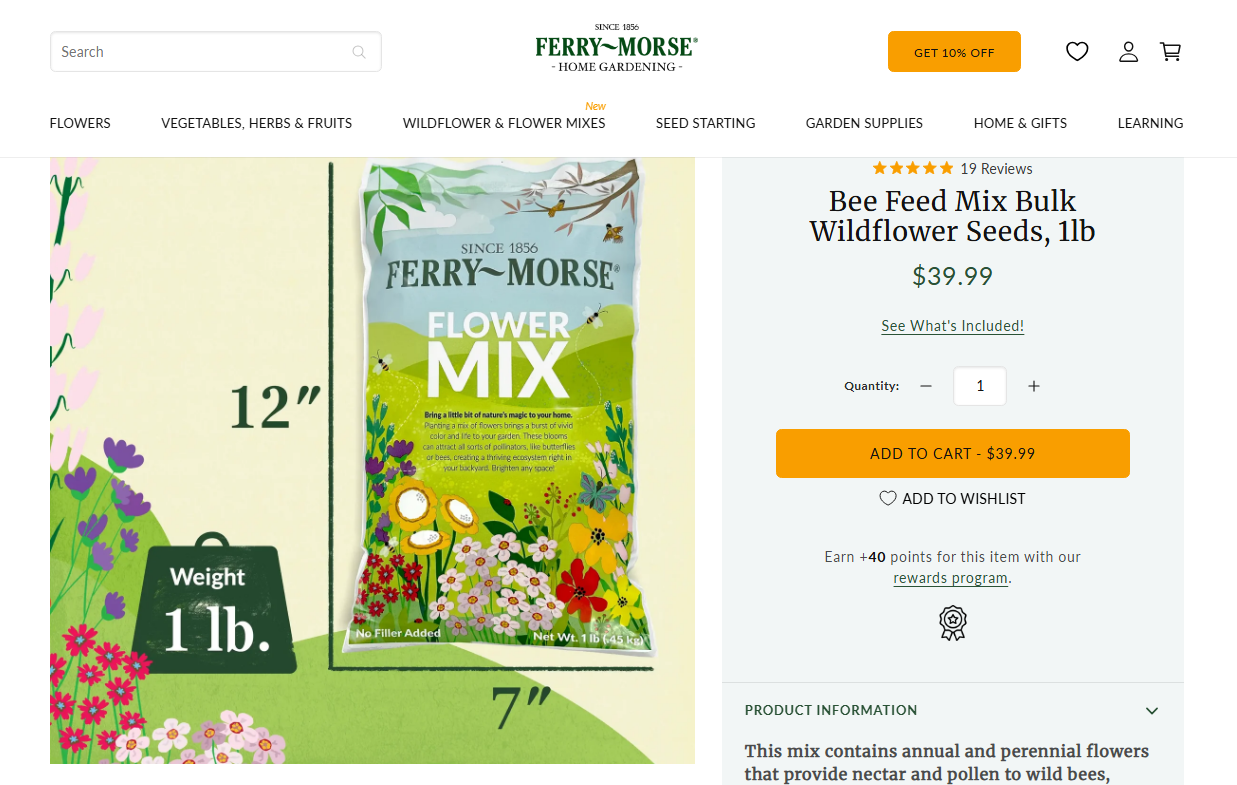
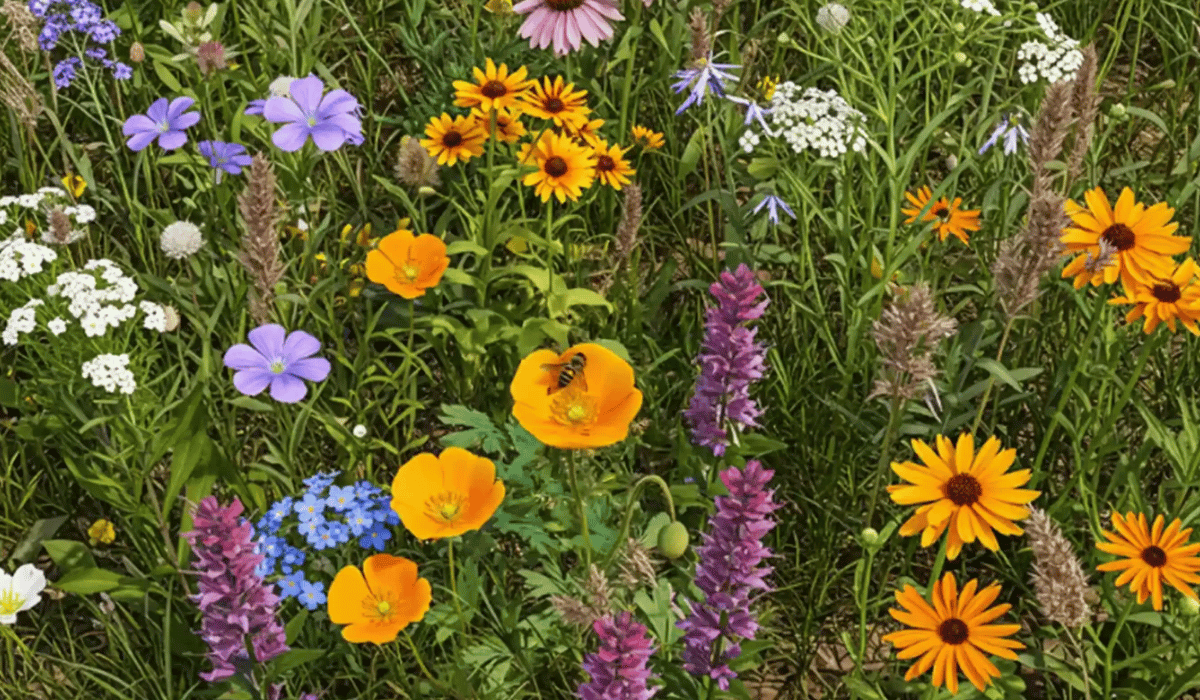
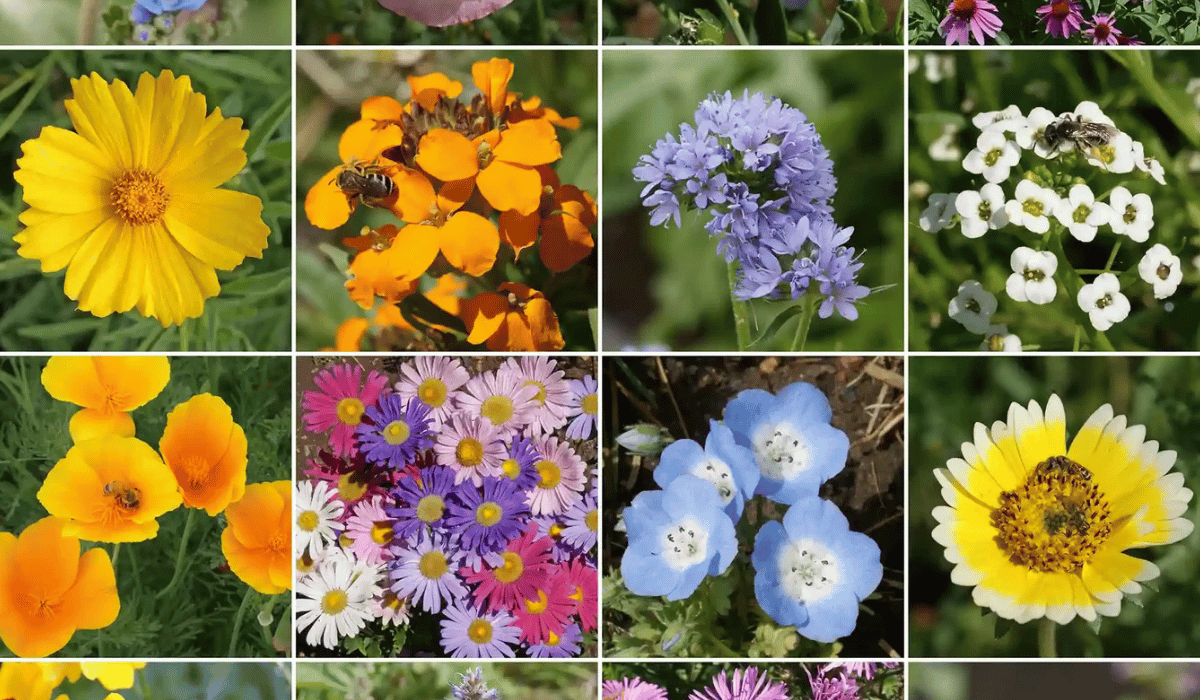
This is an absolute staple for any bee-centric garden. Ferry-Morse has formulated this mix specifically to support honeybees and native solitary bees. It is a blend of pollen-rich and nectar-dense flowers like baby blue eyes, purple coneflower, lance-leaved coreopsis, and blue flax.
I like this brand because Ferry-Morse maintains a strict non-neonicotinoid, pollinator-safe standard across all their products, not just this mix. Meaning, any seed packets you buy from them are completely safe for bee colonies.
It doesn’t hurt that Ferry-Morse also sells smaller seed bags, which are ideal for a small garden bed or raised bed. Their seeds have high germination rates, so between that and the smaller, more affordable packets, it’s a low-cost way to bring pollinators to your yard.
- Top Feature: Strict non-neonic, pollinator-safe seeds with a growth guarantee, non-GMO, and organic options
- Annual/Perennial: Balanced mix
- Best For: Bees at a low cost
Eden Brothers Bee Feed Wildflower Mix
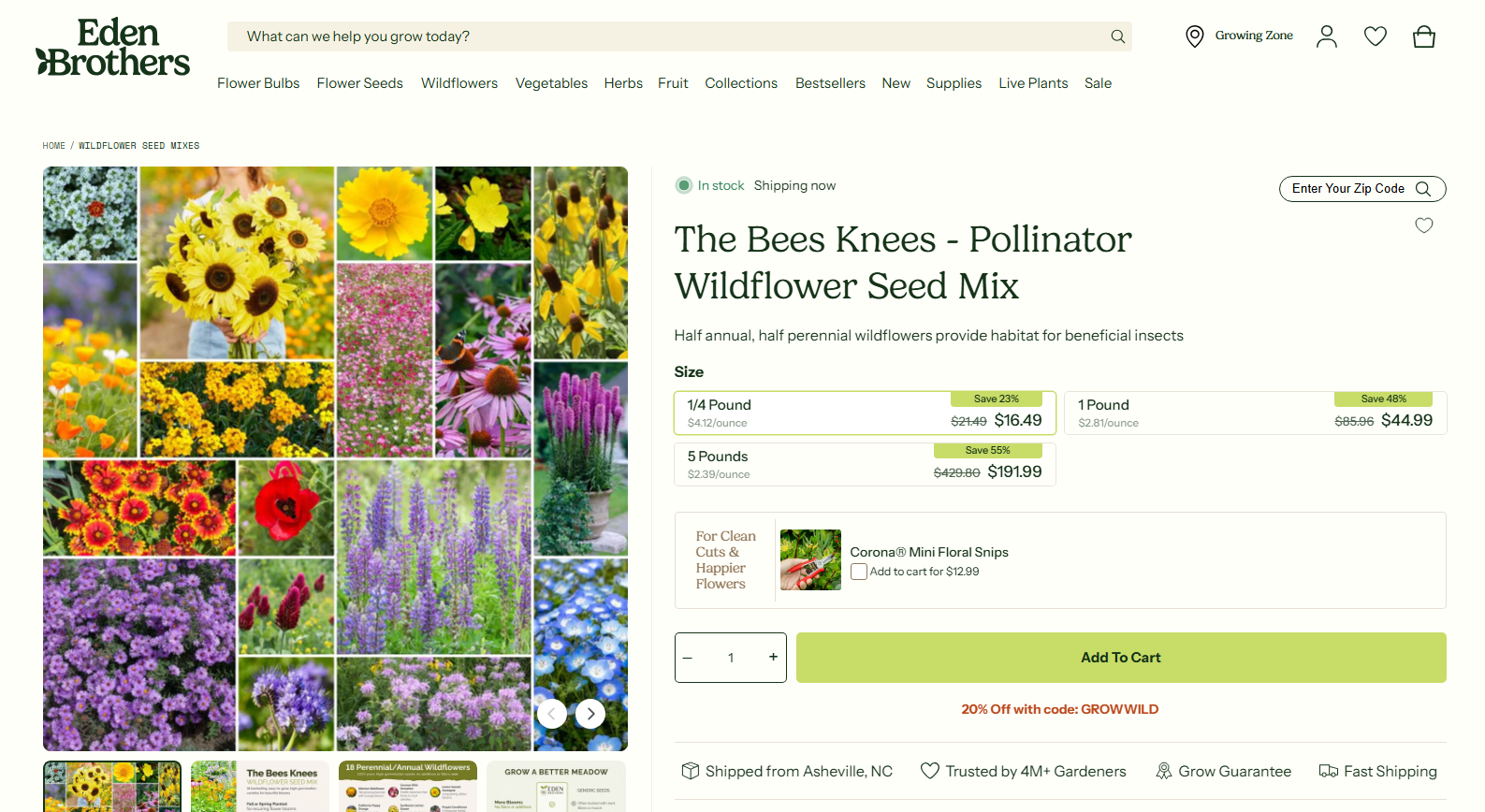
Eden Brothers is the other end of the investment chart, in my mind, meaning, they are also an affordable option but mostly for those who want commercial blends in bulk. If you need heavy-hitting commercial blends available in large bulk sizes for an orchard, property line, or your entire backyard, this is a good mix.
Instead of buying by the seed packet like with Ferry-Morse, you buy by the pound, so you can cover a wider space without a tremendously higher investment. This mix contains a high percentage of clover, alfalfa, and blanketflower, making it perfect for establishing a low-maintenance bee pasture.
- Top Feature: Available in massive bulk weights to cover large acreages affordably
- Annual/Perennial: Balanced mix in bulk sizes
- Best For: Large meadows or pastures
Best Pollinator Seed Mix for Monarchs, Swallowtails, and Skippers
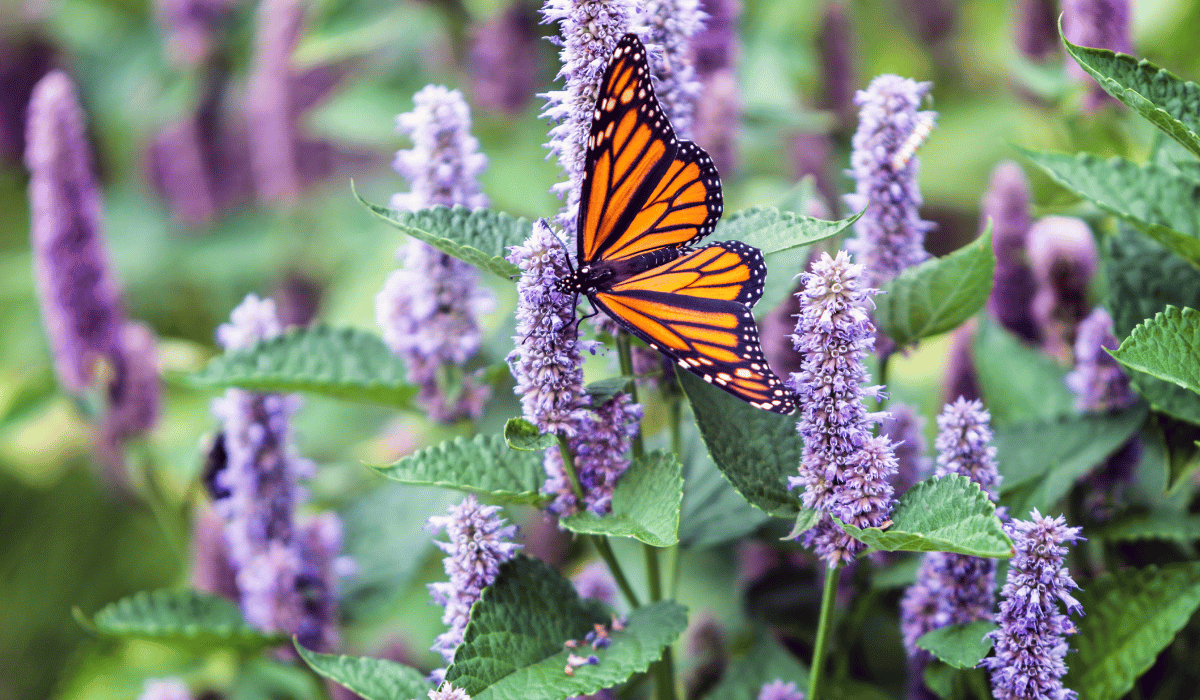
Everyone loves the chance to sit outside and suddenly see a big butterfly land on a flower. But butterflies need two distinct types of plants to survive: nectar plants to feed the adult butterflies and host plants where those same adult butterflies, once properly fed, can safely lay their eggs. The latter has to be good enough to feed the hungry caterpillars once they emerge, too. So if you want to bring butterflies around, you’ll need a very specific mix of seeds.
Ferry-Morse Monarch Butterfly Mix
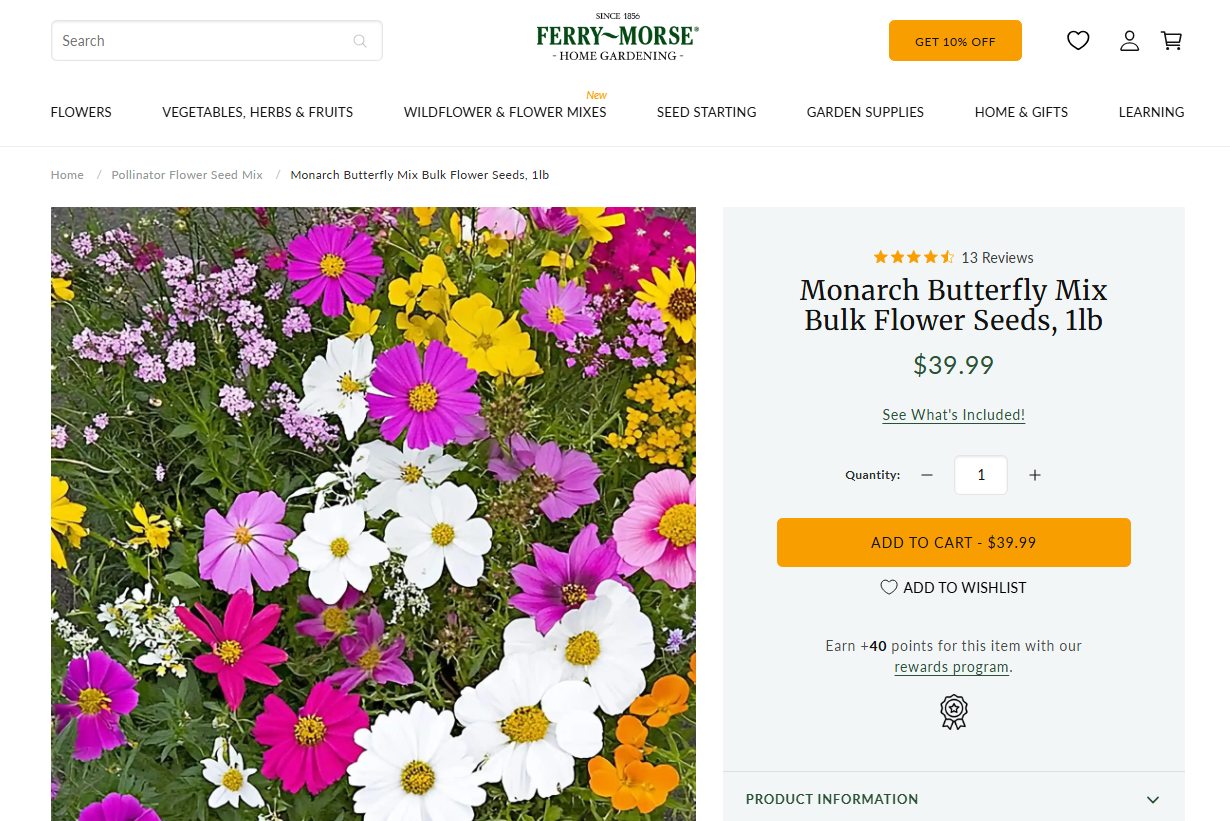
Ferry-Morse’s Monarch Butterfly Mix it’s exactly what the name implies: It will bring a lot of Monarch butterflies to your yard. I have actually used this mix to cultivate a lot of milkweed, which has led to one small garden bed being a butterfly haven.
This particular mix has annuals that provide the nectar adult butterflies need and milkweed seeds, which are great host plants for caterpillars. So, with it, you’ll have a sustainable blend that supports butterflies throughout their lifecycle, but bear in mind you might have to supplement this with additional seeds year over year, considering the part that provides food is an annual.
Thankfully, Ferry-Morse sells a lot of different varieties and packets in smaller quantities, so you can always supplement the annuals at a lower cost each season.
- Top Feature: Provides essential caterpillar host plants alongside adult nectar flowers
- Annual/Perennial: Includes perennial host milkweed
- Best For: Monarch butterflies
Botanical Interests Bring Home the Butterflies Mix
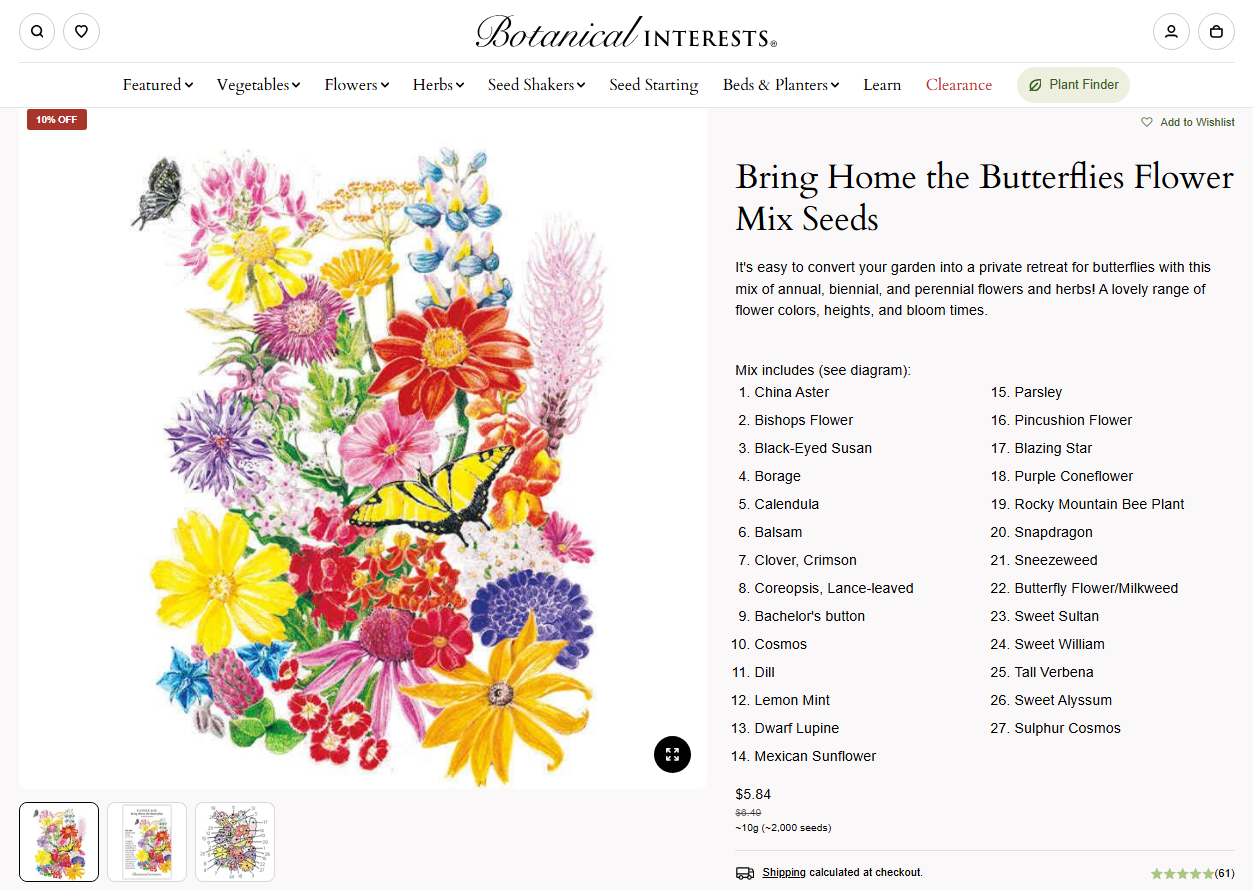
Botanical Interests gets my vote because they not only have some of the most beautiful packaging, but they also provide some of the densest education. So, when you open the packet, it actually has a section that’s an instructional guide, detailing how you can support butterfly habitats.
This particular butterfly mix focuses on a larger array of butterflies, not just Monarchs, so it provides a collection of things like cosmos, zinnia, and sweet alyssum, all of which create a high-contrast visual display that butterflies can spot from a distance.
Botanical Interests is a bit on the pricier side, though, especially compared to the Ferry-Morse mix, but you get all the quick guides you need if you are brand new to gardening.
- Top Feature: Beautifully illustrated packets with deep educational guides inside
- Annual/Perennial: 60% annual/40% perennial
- Best For: Beginners and small beds
Best Pollinator Seed Mix for Beneficial Insects and Pest Control
If you want to cast a wide net and support all pollinators simultaneously, then you’ll want a more generic mix. I really like these generic mixes because they are beneficial for predatory insects like lacewings and ladybugs. I have spent so many seasons trying to purchase ladybugs and lacewing larvae early on so they eat the bad pests who compete with me (and my local birds/rabbits) for my fresh veggies.
Turns out it’s a much better investment to plant a small garden bed, area of your garden, or part of your yard with a general pollinator flower mix. That way you attract the pollinators naturally, and then they, in turn, pay you back for that kindness by eating the bad insects that would destroy your vegetable garden.
Burpee Pollinator Mix
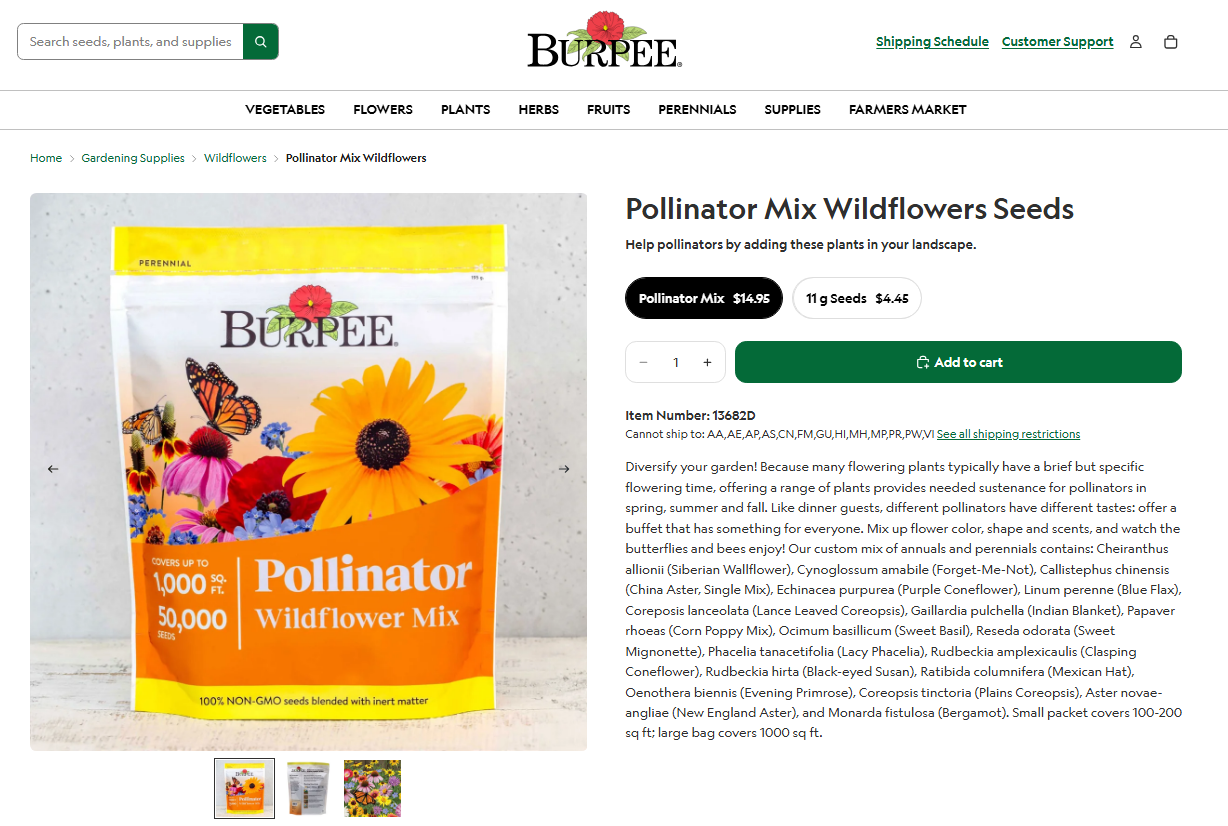
You’ve no doubt seen Burpee in stores, especially in the early spring. And if you’ve ever planted a garden before, you’ve probably bought some of their pre-started veggies. They are well known for their premium genetics and good germination.
Their general pollinator wildflower mix is a high-quality mixture of hardy perennials and easy-to-grow annuals that’s engineered specifically to handle a wide range of soil conditions.
So, for example, if you go to Home Depot across multiple states, you’ll find the same tomato or pepper varieties in the Colorado store as you would in the Florida store or the Minnesota store. That’s because the company focuses on hardy, staple varieties that can theoretically grow in just about any conditions.
The same applies to the seed mixes they sell. This particular wildflower mix is very forgiving, so if you have poor soil, rocky soil, or you’ve never done a soil test and you have no idea what kind of soil you have, this is going to likely give you the best results.
- Top Feature: High-grade premium genetics with excellent disease resistance
- Annual/Perennial: Mostly perennials
- Best For: Tough or poor soil
Livingston Seed Pollinator Palooza
Livingston is a trusted brand that provides a lot of heritage lines. I like them because they are, in one sense, very much the opposite of Burpee: They have mixes that are highly adapted to regional climates.
This means you get a steady, continuous wave of flowers from early spring through late autumn no matter where you live, making sure all the local pollinators have a reliable food source for most of the year.
The biggest downside I have run into when trying to purchase from Livingston is that they don’t sell directly to clients. Rather, they sell to independent retailers, so if you like to go to your local farm store or garden center, you’ll probably have a higher chance of finding their seed mixes. But there’s no guarantee that your local store will have this precise mixture.
- Top Feature:Highly adapted for regional farm layouts and steady seasonal transitions
- Annual/Perennial: Balanced mix
- Best For: Anyone who wants to buy seed mixes at independent farms or garden centers
Summing Up
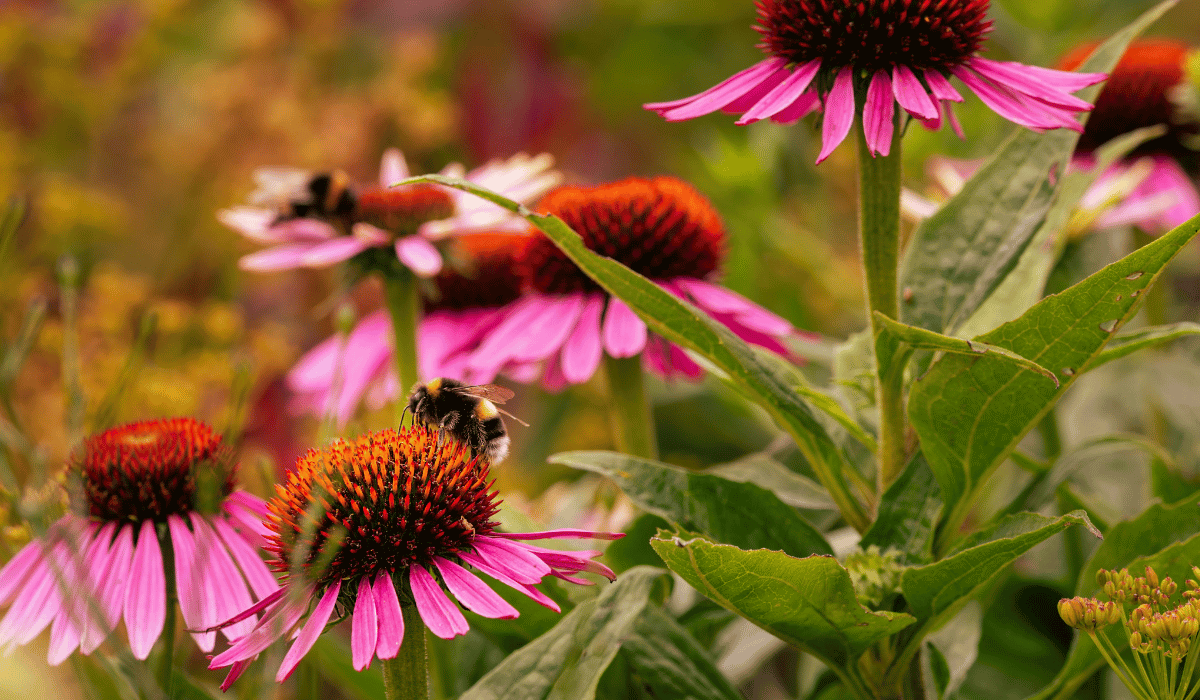
Choosing to replace even a small section of lawn with a vibrant, living pollinator mix is a rewarding and sustainable choice. Ferry-Morse is an easy go-to for those who are just starting or have a smaller area, as is Botanical Interests if you need educational info, too. Burpee and Eden Brothers can help scale for other targeted pollinators, and Livingston is great for unique heritage lines.
No matter your choice, just be sure to match the right seed mix to your layout, size, and pollinator choice.